
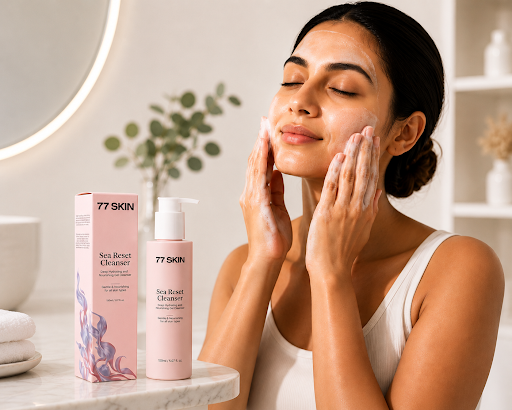
When people talk about glowing skin, they often think of expensive products, complicated routines, and multiple layers of skincare. But a healthy-looking glow does not necessarily require a long routine.
Skincare for glowing skin is more about maintaining hydration, supporting the skin barrier, cleansing appropriately, and protecting the skin from environmental damage. A simple routine used consistently can be more useful than constantly changing products in search of instant results.
What Does Glowing Skin Actually Mean?
Glowing skin does not have to mean oily or extremely shiny skin. A healthy-looking complexion generally appears hydrated, smooth, and comfortable.
When skin becomes excessively dry or dehydrated, it may look dull, rough, or tired. Supporting hydration can therefore make an important difference to the overall appearance of the skin.
However, hydration is only one part of the picture. Cleansing, moisturizing, sun protection, exfoliation habits, and lifestyle factors can also influence how your skin looks.
1. Start With a Gentle Cleanser
Cleansing is the foundation of most skincare routines. It helps remove sweat, excess oil, sunscreen, makeup, and environmental buildup from the skin.
However, stronger cleansing does not necessarily mean better cleansing.
If your face feels tight or uncomfortable immediately after washing, your cleanser may be too harsh for your skin or you may be cleansing too frequently.
A gentle cleanser can help remove everyday buildup while maintaining a more comfortable after-feel.
2. Keep Your Skin Hydrated
Hydration is one of the most important parts of a routine focused on healthy-looking skin.
Dehydrated skin can appear dull and may have a rougher texture. Hydrating ingredients such as glycerin and hyaluronic acid derivatives are commonly used to help attract water to the skin.
After applying a hydrating product, moisturizer can help reduce moisture loss and keep the skin feeling soft.
Remember that hydration does not necessarily mean applying multiple layers of products. One well-suited hydrating product may be enough.
3. Moisturize Regularly
Moisturizer helps support the skin barrier and maintain a comfortable level of hydration.
The ideal moisturizer depends on your skin type. Dry skin may prefer richer creams, while oily skin may feel better with lightweight lotions or gel-based formulas.
Even oily skin can experience dehydration, so skipping moisturizer completely is not always the best approach.
Instead, choose a texture that feels comfortable and fits your skin's needs.
4. Protect Your Skin From the Sun
Daily sun protection is an important part of maintaining a healthy-looking complexion.

UV exposure can contribute to pigmentation, sun damage, and premature visible signs of aging. Using a broad-spectrum sunscreen can help protect exposed skin during the day.
Apply sunscreen as the final step of your morning skincare routine and reapply as needed when spending extended periods outdoors.
5. Be Careful With Exfoliation
Exfoliation can help remove dead skin cells from the surface and may improve the appearance of uneven texture.
However, more exfoliation does not necessarily mean more glow.
Over-exfoliating can cause dryness, irritation, and sensitivity, which may make the skin look less healthy. If you use exfoliating acids or other active ingredients, introduce them gradually and follow the product's directions.
If your skin is already irritated or unusually sensitive, simplifying your routine may be more appropriate than adding another exfoliating product.
6. Avoid Overcomplicating Your Routine
A common skincare mistake is believing that more products will automatically produce better results.
Using several serums, acids, masks, scrubs, and treatments at the same time can make your routine difficult to manage. It can also make it harder to identify which product is helping or irritating your skin.
Instead, start with the basics and introduce additional products only when you have a clear reason to use them.
A simple routine can include a cleanser, moisturizer, and sunscreen, with hydration or targeted treatments added according to your individual needs.
Sea Reset Cleanser for a Hydrating Start
Sea Reset Cleanser can be a useful cleansing step for a routine focused on hydrated, healthy-looking skin.
It is a low-pH hydrating gel cleanser with a pH of approximately 5. The formula combines amino surfactants with hydrating ingredients including glycerin and sodium hyaluronate.
The cleanser is fragrance-free, colour-free, and sulfate-free. It is designed to lift daily buildup, excess oil, sunscreen, and light makeup without leaving an unnecessarily tight or stripped after-feel.
Starting with comfortable cleansing can make it easier to build the rest of your routine around hydration and moisturization.
Lifestyle Habits Can Support Healthy-Looking Skin
Skincare products are only one part of maintaining healthy-looking skin.
Adequate sleep, a balanced diet, regular physical activity, managing stress, and staying adequately hydrated all contribute to overall wellbeing.
Drinking water is important for general health, but drinking more water alone does not automatically solve every skin hydration issue. The skin also needs appropriate topical care to help maintain its surface comfort and moisture balance.
Your environment can matter too. Cold weather, dry indoor air, heat, and humidity can all influence how your skin feels.
Give Your Routine Time
One of the easiest ways to make skincare less confusing is to avoid changing products constantly.
When you introduce several new products at once, you cannot easily tell which one is responsible for a positive or negative change.
Instead, introduce new products gradually and observe your skin.
Consistency is often more valuable than chasing every new skincare trend. Your goal should be to build habits that you can realistically maintain every day.
Final Thoughts
Skincare for glowing skin does not need to be complicated. Focus on gentle cleansing, adequate hydration, regular moisturizing, and daily sun protection.
If your skin needs additional care, introduce targeted products gradually rather than adding everything at once. Pay attention to how your skin feels, especially if it becomes dry, tight, or irritated.
A healthy-looking glow is not about making your skin unnaturally shiny. It is about supporting skin that feels comfortable, hydrated, smooth, and well cared for over time.